Jeffrey Brown:
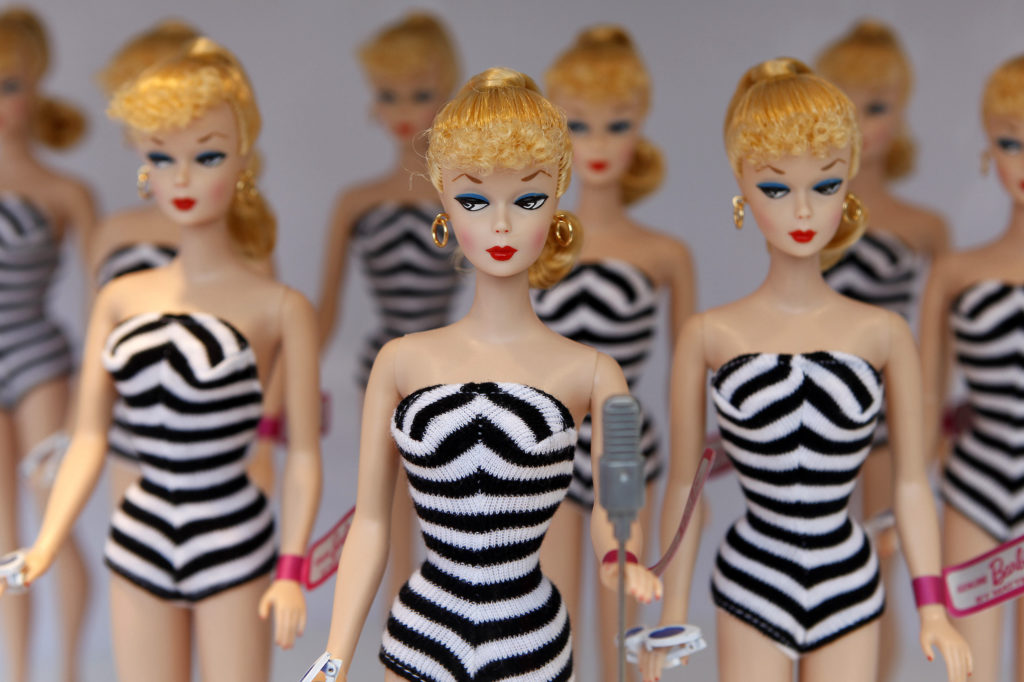
Barbie — her original full name was Barbara Millicent Roberts — was created in 1959 by Ruth Handler or the Mattel toy company.
She stood 11.5′ inches tall. That mostly hasn't changed, but her look certainly has, as the blonde, slim-waisted, full-chested doll became a cultural phenomenon of the postwar era. Her male counterpart, Ken, was brought on board in 1961. Worth noting, he first came with straight arms that didn't bend and a head that could turn only left and right.
It was 1980 before Mattel released the first Black and Latina dolls actually named Barbie. And, in 2016, three new body types were introduced curvy, petite, and tall. Also changed, who she is, including her work. She's saved lives as a surgeon, traveled to space as an astronaut, and even run for president, a few times, in fact.
She has had over 250 careers, from CEO to Canadian Mountie. She still sells plenty across the globe, found in more than 150 countries. Mattel estimates that more than 100 dolls are sold every minute. And, of course, she's on social media with some 19 million followers across platforms.
An icon of the LGBTQ+ community, Barbie drag shows have cropped up this summer in anticipation of the film. Now Gerwig's film, starring Ryan Gosling as Ken and Margot Robbie as Barbie, clearly has some high heels to fill.
Joining me now is Andrea Nevins. She's director and writer of the documentary "Tiny Shoulders: Rethinking Barbie."
Thanks for joining us.
So, we are deep into the world of cultural touchstones here, right? How can one small doll mean so many different things?
Andrea Nevins, Director and Writer, "Tiny Shoulders: Rethinking Barbie": Well, this was a doll that was not like any doll that had preceded her.
Most dolls were baby dolls. And baby dolls were a way for little girls to enact potentially the only job that they could have in society, which was to be a mother. And that was the sole aspiration. This doll came about, and it was an adult doll, and it had breasts, and thus it almost instantly absorbed all of the contested space of femininity at the time and continues to today.
ncG1vNJzZmivp6x7sa7SZ6arn1%2Bjsri%2Fx6isq2ejnby4e9Kumpydo6h6sLKMm5irmpmaeqe1y6ZkmpyUqHq1u4ydpqWko2KwtrjTrqmapF2hsqitwrI%3D